

Caring for people with Parkinson’s involves Care Partners, healthcare professionals, and loved ones. People who are newly diagnosed may require extra support, especially during the first year of diagnosis. Building a personalized care team helps Care Partners provide more coordinated, effective support for people with Parkinson’s.
Importance of Building a Care Team
A comprehensive care team ensures that physical, emotional, and medical aspects of Parkinson’s are addressed effectively. Involvement of multiple Care Partners reduces burnout and isolation, and provides perspectives on different treatment approaches. It ensures that people with Parkinson’s receive more coordinated care and seek second opinions for treatment modification and improvements.
A comprehensive care team creates accountability to ensure medications are taken on time, exercises are completed, and doctor’s appointments are attended with proper support.
Understanding the key members of the care team and their roles can help Care Partners assemble the right combination of support required for their loved ones.
Movement Disorder Specialist
Movement disorder specialists are neurologists who specialize in treating Parkinson’s and other movement disorders. They offer deeper insights into how symptoms, like tremors, can affect individuals differently. Regular appointments with a movement disorder specialist provide opportunities to reassess treatment plans and recommend interventions such as cognitive assessments, medication adjustments, SPEAK OUT!® Therapy for speech and swallowing issues, and complementary therapies like Botox for dystonia.
Physical Therapists
Neuro-trained physical therapists focus on movement and mobility, and understand the specific challenges of Parkinson’s: shuffling gait, freezing episodes, and balance difficulties. Through targeted exercises, weight training, and suggestions to take bigger steps, individuals learn to combat symptoms, improve posture, build strength, and maintain stability. It is important to discuss a lifelong physical exercise program with your physical therapist. Individual therapy, daily exercise, and group activities are essential. Physical therapy and exercise programs should follow the Circle of INTENT Model to ensure lifelong care.
Exercises are essential to manage Parkinson’s. Walking, dancing, or enrolling in group classes structured for Parkinson’s, such as Rock Steady Boxing, can improve mood and help individuals feel better.
Learning PWR! Moves developed by Dr. Becky Farley, a featured presenter at Parkinson Voice Project, and working with a trained therapist in the program, can help in the effective management of Parkinson’s symptoms.
Occupational Therapists
Occupational therapists address the practical, everyday challenges of living and helping individuals with Parkinson’s maintain independence. They teach adaptive strategies and recommend modifications to home environments, such as installing grab rails in bathrooms, removing throw rugs, avoiding ladders to reduce fall risk, and preventing rehabilitation setbacks. They also evaluate an individual’s driving ability through cognitive and driving tests.
Nutritionists and Dietitians
Nutritionists and dietitians play a critical role in managing Parkinson’s, providing guidance on how to take medications such as Levodopa, which can interact with dietary protein and affect its absorption and effectiveness.
They also help time medications with meals appropriately. A nutritionist or dietitian may recommend taking Carbidopa-Levodopa 1-2 hours before or after a meal to prevent protein from interfering with medication absorption. Nutritionists and dietitians also address common issues such as constipation, weight loss, and appetite changes.
As the disease progresses and nutritional needs change, nutritionists may recommend modifications to meal consistency, supplements, and hydration to maintain energy levels, medication efficacy, and overall health.
Social Workers
Just after diagnosis, social workers can help Care Partners with obtaining disability benefits, legal preparations, and community resources. For individuals with Young Onset Parkinson’s, they assist in applying for Social Security Disability Insurance (SSDI) benefits for early Medicare access.
Social workers connect families with support groups, educational programs, and community services, and recommend counseling for Care Partners when needed.
Certified SPEAK OUT! Provider
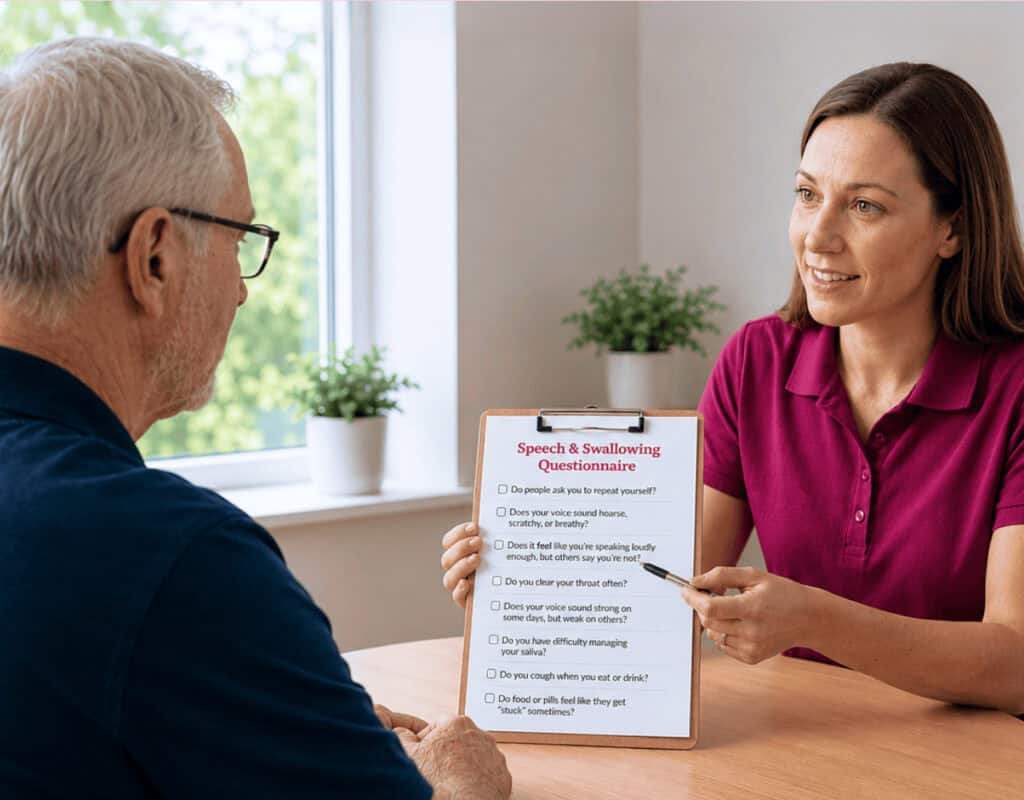
As Parkinson’s affects muscles used for speech and swallowing, individuals may develop a softer, monotone voice that can be difficult to understand, along with challenges in swallowing. The SPEAK OUT! Therapy Program developed by Parkinson Voice Project can help people with Parkinson’s and related disorders REGAIN and RETAIN their speech and swallowing. A Certified SPEAK OUT! Provider can help individuals with Parkinson’s improve speech volume, articulation, breath support, vocal quality, intonation, swallowing, and facial expression.
The SPEAK OUT! Home Practice Sessions are available online and provide structured daily practice at no charge. Parkinson Voice Project offers resources for people with Parkinson’s and their families, including educational lectures, blogs, and therapy materials at no charge.
Care Partners
Care Partners play an essential role in supporting their partner with Parkinson’s. They accompany their partner to doctor appointments and monitor medication timing and side effects.
Engaging together in simple activities like reminiscing, looking through scrapbooks, and talking about happy memories can be beneficial for the emotional well-being of people with Parkinson’s.
Care Partners, adult children, and family members are encouraged to join the Virtual Parkinson’s Family Education Group. These monthly sessions provide education, resources, and community support for everyone in the Parkinson’s journey.
Care Partners must prioritize self-care. For example, maintain friendships, pursue interests, and accept help from community members to prevent burnout and isolation.
Community Support
Social engagement is essential for people with Parkinson’s to maintain a positive attitude. Parkinson Voice Project provides an environment for connection and peer support through Weekly SPEAK OUT! Classes, online Home Practice Sessions, and community education. Attending group events like singing and community activities can reduce isolation and withdrawal tendencies, reinforcing hope and optimism.
Looking Ahead
Building a care team begins with one or two trusted professionals and expands as needs evolve. A well-structured care team can often include a neurologist, a movement disorder specialist, a speech-language pathologist, a dietitian, and a physical therapist. Support from Care Partners, friends, and family is essential for day-to-day assistance and encouragement. Together, this collaborative approach helps ensure comprehensive, coordinated care that supports both medical needs and quality of life.
Find a Certified SPEAK OUT! Provider near you and start speaking with INTENT today.