

Young Onset Parkinson’s Disease describes Parkinson’s symptoms that begin before the age of 50. The diagnosis can feel unexpected, especially for people who are working, raising families, building relationships, or planning for the future. Even so, many people continue to live full, active lives when they receive early support and consistent guidance. Learning what Young Onset Parkinson’s Disease is, how symptoms begin, and why the condition appears earlier helps people respond with clarity instead of fear.
People with Young Onset Parkinson’s Disease can REGAIN and RETAIN strength in their speech, swallowing, and day-to-day function through early therapy and supportive routines. Knowledge allows people to move forward with INTENT and confidence.
What is Young Onset Parkinson’s Disease (YOPD)
Many people receive their diagnosis in their thirties or forties. Some notice early symptoms even sooner. YOPD includes the same underlying neurological changes found in Parkinson’s diagnosed later in life, but the timing makes it distinct. Symptoms begin when people are often at the most active stages of their personal and professional lives. The practical and emotional experience of YOPD reflects this difference.
What Causes Symptoms in Young Onset Parkinson’s Disease
Parkinson’s affects the brain region known as the substantia nigra. This area produces dopamine, a neurotransmitter that supports automatic movements such as walking, talking, and swallowing. When dopamine levels drop, the brain has difficulty controlling automatic movement in a smooth, coordinated way. This change leads to symptoms such as slowness, stiffness, and changes in facial expression.
In YOPD, these changes follow the same biological pathway as Parkinson’s in older adults. The difference is how the brain adapts over time. Many younger adults experience symptoms differently because they have stronger muscle tone, faster movement patterns, and higher daily physical demands. They also tend to notice changes earlier because they are active at work, caring for children, or involved in active social environments.
Some younger adults experience earlier dystonia, which involves involuntary muscle tightening or cramping. Others notice difficulties in planning movements or maintaining energy during long days.
These patterns do not reflect faster progression. They reflect how Parkinson’s interacts with a younger and more active nervous system.
Why YOPD is Often Misdiagnosed
People with YOPD often wait longer for a clear diagnosis. Many younger adults experience years of symptoms before receiving a neurologic evaluation. Early signs may be attributed to stress, fatigue, depression, anxiety, repetitive strain, or orthopedic concerns.
This delay can occur for several reasons:
- Symptoms may begin gradually or be mild in the early stages
- People may appear healthy and active
- Providers may not expect Parkinson’s at a young age
- Tremors may not appear early
- Non-motor symptoms may be mistaken for unrelated concerns
Many people describe feeling relieved once they have an explanation for their symptoms. A clear diagnosis is reassuring. It helps them understand their condition and take steps toward early therapy and helpful routines.
Early Signs of YOPD
Early symptoms appear gradually. People often adjust without realizing that changes are related to Parkinson’s. Understanding early signs helps people seek support sooner.
Speech Changes
Speech may become softer or harder to hear. People may need to repeat themselves more often. These changes appear gradually and may be noticed by others first.
Reduced Facial Expression
Facial muscles may move more slowly, even though emotions remain the same. People may look tired or serious without intending to. This is called masked facies, and refers to a reduced degree of facial expression, giving the face a mask-like appearance.
Slower or Smaller Movements
Walking, handwriting, or everyday tasks may become slower or smaller in range. Many younger adults notice that their typical pace feels unfamiliar.
Tremors or Stiffness on One Side
Some people develop tremors. Others notice stiffness or reduced arm swing on one side of the body.
These signs are common and do not predict how symptoms will progress. They provide a starting point for evaluation.
Motor Symptoms in YOPD
- Bradykinesia, or slowness of movement
- Muscle stiffness
- Tremor
- Dystonia, especially in the feet or hands
- Fatigue after movement
- Difficulty coordinating fast-paced tasks
- Small handwriting
- Balance challenges
Because younger adults often lead active lives, they may notice motor changes earlier during exercise, work tasks, or daily routines.
Non-Motor Symptoms in YOPD
Many people experience non-motor symptoms long before motor symptoms appear. These may include:
- Anxiety
- Depression
- Fatigue
- Sleep changes
- Loss of smell
- Constipation
- Cognitive changes such as slower thinking or mild memory problems
- Apathy
- Impulse control changes (sometimes related to medication)
- Restlessness
- Mood fluctuations
These symptoms may feel confusing because they do not immediately resemble a movement condition. Noticing them as symptoms of YOPD helps people seek a neurological consult.
How YOPD Affects Daily Life
People diagnosed with YOPD often manage responsibilities that require energy, planning, flexibility, and communication. Many balance careers, parenting, financial planning, and long-term goals. Understanding how YOPD interacts with daily life helps people prepare with confidence.
Common areas of impact include:
- Work and career: Long meetings, fast-paced environments, and high communication demands can highlight speech fatigue or slower movement.
- Parenting: Caring for young children requires physical activity and emotional energy, which may feel more tiring.
- Relationships: People may feel unsure about discussing symptoms or asking for support.
- Identity: Adjusting to a Parkinson’s diagnosis at a younger age can affect how people perceive themselves, their relationships, and their future.
- Planning: Long-term financial and medical planning may feel unfamiliar but empowering when done early.
Speech and Swallowing Changes in YOPD
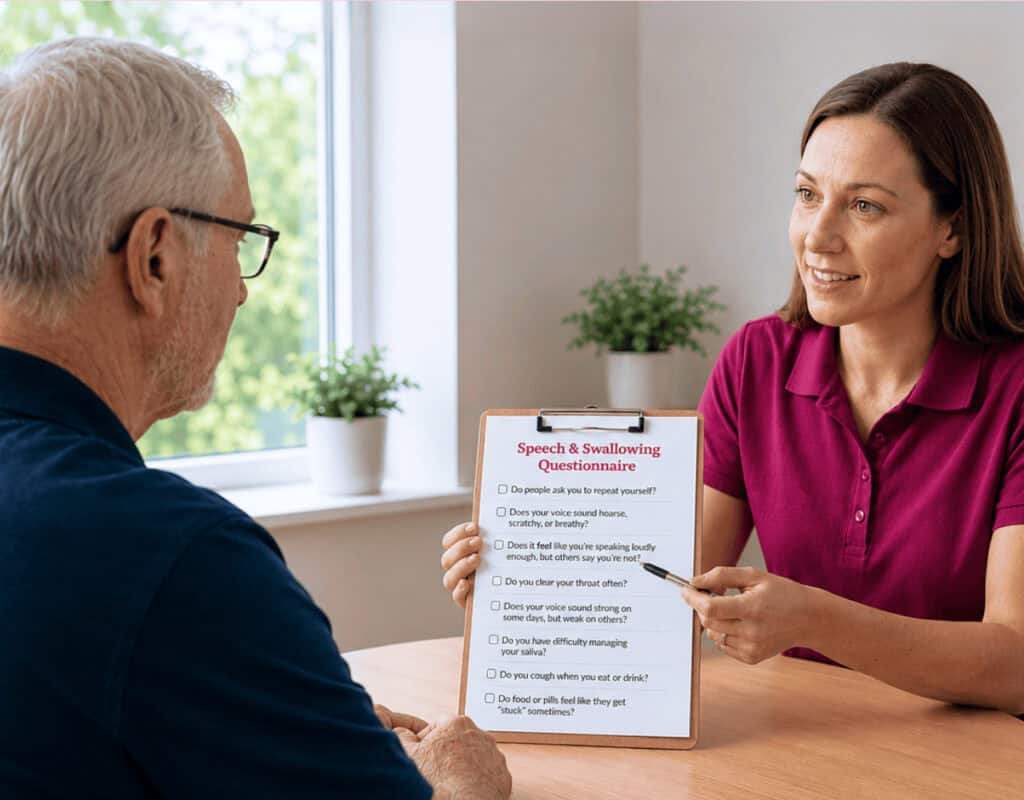
People with YOPD often notice changes in speech. This is because their work and personal lives may involve long conversations, group discussions, presentations, and social events.
Speech may feel softer or require more effort. The person with YOPD may think their voice is loud enough but people keep asking them to repeat themselves. That is due to a sensory deficit that impairs the self-perception of speech. A person with YOPD may “feel” that they are speaking normally, but the listener hears a softer voice.
Swallowing changes may appear gradually. People may cough more during meals, take longer to eat, or feel that food moves slowly.
How SPEAK OUT!® Therapy Helps
SPEAK OUT! Therapy is delivered by a Certified SPEAK OUT! Provider, a speech-language pathologist with specialized training from Parkinson Voice Project. Therapy begins with a SPEAK OUT! Evaluation, followed by individual sessions, weekly SPEAK OUT! Classes, and daily SPEAK OUT! Home Practice.
SPEAK OUT! Therapy teaches people with Parkinson’s to speak with INTENT and can help:
- Maintain a stronger voice at work
- Communicate more clearly in social settings
- Manage swallowing safety
- Build and maintain confidence in daily interactions
Early therapy provides people with the tools they need to REGAIN and RETAIN their speech and swallowing for the long haul. They are able to establish a daily SPEAK OUT! Home Practice routine and maintain it.
Living Well With YOPD
People with YOPD often discover strengths they did not realize they had. They learn how to plan with intention, communicate confidently, and establish routines that maintain their speech and swallowing. Many people with YOPD continue working, raising families, traveling, and pursuing hobbies for years with early therapy.
Care Partners play a vital role by offering understanding, patience, and emotional support. Together, they create a strong foundation for daily life.
Your Next Step
SPEAK OUT! Therapy is available. People with YOPD do not have to navigate their diagnosis alone.
Find a Certified SPEAK OUT! Provider near you. Start speaking with INTENT today.