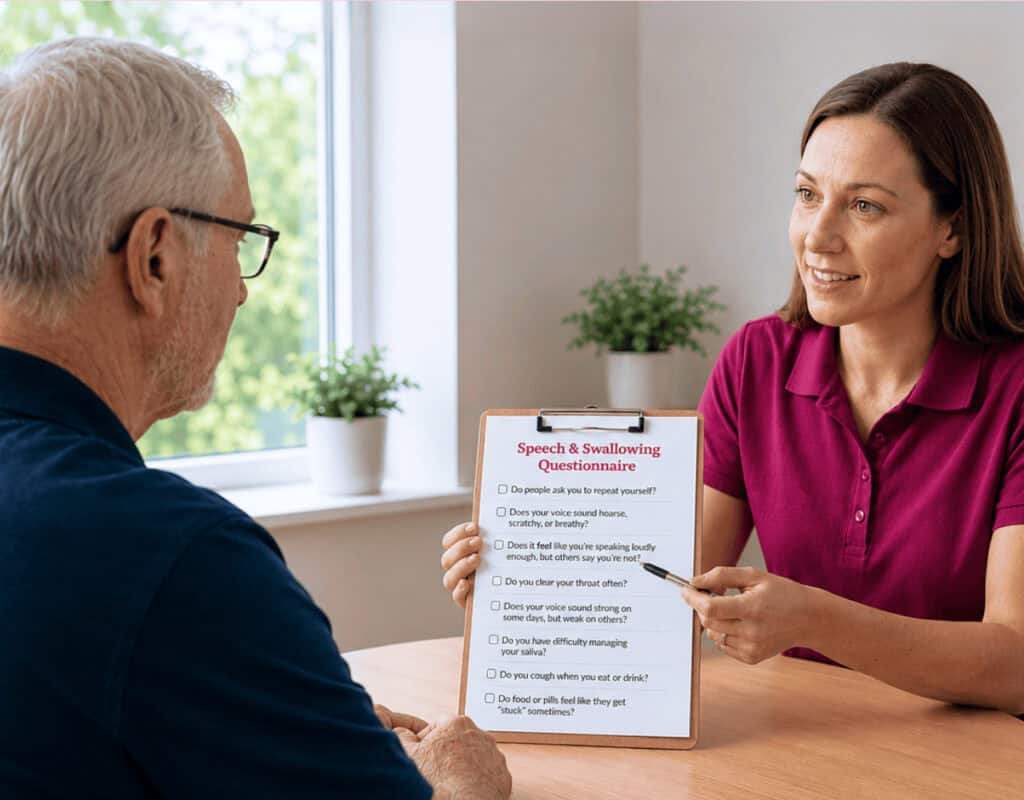


One of the most overlooked challenges in Parkinson’s disease is a lack of motivation or apathy. Families may notice that people with Parkinson’s struggle to start activities or follow through with exercise. People with Parkinson’s are not lazy. This lack of motivation is not a matter of willpower but a direct result of changes in the brain’s chemistry. The SPEAK OUT!® Therapy Program serves as an antidote to apathy, reigniting purpose and engagement in individuals with Parkinson’s by empowering their voice.
Dopamine’s Role in Motivation
Dopamine is a neurotransmitter that carries messages between nerve cells. Not only is it responsible for the planning and execution of automatic movements, it also is responsible for motivation and drive. A decrease of dopamine, as found in people with Parkinson’s, can present as apathy. It interferes with the effective management of PD symptoms, since apathetic people are less inclined to exercise and follow their medication schedules.
Apathy vs. Depression
Up to 40% of people with Parkinson’s experience apathy. It is not the same as depression. Depression involves sadness, hopelessness, or loss of pleasure, while apathy is a lack of initiative and reduced effort. Someone with apathy may not feel sad, but they struggle to start even simple daily tasks. Recognizing this difference is crucial because it shapes how families and clinicians respond. Apathy should not be mistaken for disinterest or laziness; it is a neurological symptom tied to dopamine loss.
How Low Motivation Appears in Daily Life
For people with Parkinson’s, low motivation can affect every part of daily living. Common examples include:
- Avoiding exercise even when the benefits are understood
- Delayed participation in therapy or home exercise programs without reminders
- Reduced interest in meals, hobbies, or social activities that used to be enjoyed
- Hesitation to attend group events or therapy sessions
Care Partners often describe these behaviors as puzzling or frustrating, especially when the person acknowledges the importance of staying active but struggles to act on it. Understanding that the root cause is biological can shift the response from frustration to empathy, and from blame to support.
The Science of Speaking with INTENT
Loss of dopamine disrupts the brain’s automatic motor system, which typically manages walking, talking, and swallowing without conscious effort. This is why everyday activities may feel difficult or inconsistent for people with Parkinson’s.
The intentional motor system, however, remains available. By focusing deliberately, people can bypass impaired automatic pathways. SPEAK OUT! Therapy teaches people with Parkinson’s to speak with INTENT, which means to project the voice or to speak with purpose. This approach shifts speaking from an automatic function to an intentional act.
The Circle of INTENT
- SPEAK OUT! Evaluation – An evaluation is conducted by a Certified SPEAK OUT! Provider. This is a speech-language pathologist who has completed specialized training through Parkinson Voice Project.
- What is Parkinson’s? Video – Patients, families, and close friends watch this video to learn about Parkinson’s and to understand why “INTENT” is an important key to managing this disease.
- Daily SPEAK OUT! Home Practice – Daily home practice is essential. Patients complete speech exercises using the SPEAK OUT! Home Practice Sessions, digital booklet, and flashcards.
- Individual SPEAK OUT! Therapy – Patients and families work with a Certified SPEAK OUT! Provider to learn the SPEAK OUT! Exercises and establish a consistent home practice routine.
- Weekly SPEAK OUT! Classes – Weekly SPEAK OUT! Classes are essential for ongoing speech practice, education, and support. They also foster accountability, reduce isolation, and build camaraderie with other SPEAK OUT! Graduates.
- SPEAK OUT! Refreshers – Patients and families meet with their Certified SPEAK OUT! Provider every 6-12 months for a re-evaluation to ensure that progress is maintained and that a consistent home practice routine continues.
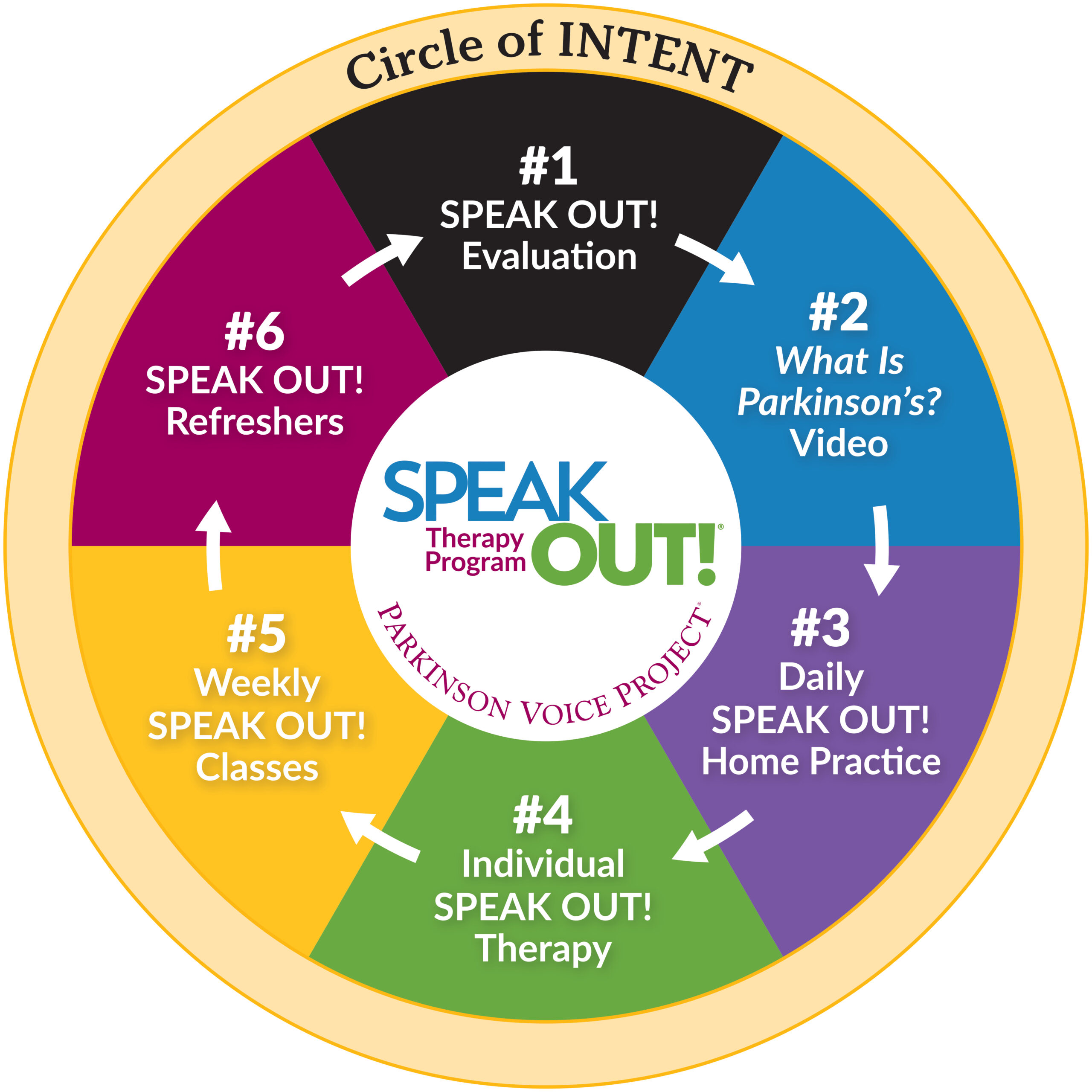
The Circle of INTENT conveys that Parkinson Voice Project is with people with Parkinson’s for the long haul. The SPEAK OUT! Therapy Program never stops.
Community and Care Partner Support
Motivation grows stronger with shared experiences. SPEAK OUT! Classes ensure that participants are practicing alongside others who have the same challenges and goals. This component of the program turns therapy into a community effort, which is especially powerful for combating apathy.
Care Partners play a vital role. Simple reminders, shared participation in practice, and encouragement to attend group sessions all help sustain progress. Recognizing that motivation lapses are neurological symptoms, not personality flaws, enables Care Partners to respond with patience and empathy.
Parkinson Voice Project also offers a Parkinson’s Family Education Group, to provide Care Partners and families with education, resources and a supportive community. These monthly sessions provide practical tools to navigate the Parkinson’s journey.
Research and Long-Term Outcomes
Families often notice that confidence returns, phone calls feel easier, and social outings are more enjoyable. These lived experiences are reflected in Parkinson Voice Project’s research, which highlights measurable improvements in vocal volume, clarity, and social participation. Most importantly, SPEAK OUT! Refreshers, a critical component of the SPEAK OUT! Therapy Program, ensure that progress is maintained for the long haul.
Find a SPEAK OUT! Provider TODAY to get started with SPEAK OUT! Therapy and find your voice.